Global Institutions and Local Struggles - Indigenous Rights in Solidarity
Indigenous Rights in Solidarity

Solidarity is a big word in international politics—an ideal that nations, coalitions, and advocacy groups routinely invoke. The theory goes that by insisting on common purpose, we can build a world where boundaries of tribe or nation matter less, and our shared responsibility matters more. Yet, look closely at the record—whether in the United Nations’ own statements on social development, or in official UNHRC reports on solidarity—and the rhetoric often crumbles when set against reality.
At the level of individual experience, life is shaped far more by personal context, luck, and local community than by sweeping declarations of mutual aid. Sometimes, even well-intentioned international frameworks, such as those discussed by the OHCHR on international solidarity and rights, falter when confronted by competition for scarce land or the blunt reality of conflicting interests.
Proposals for genuine repair—like those in practical guides to land reparations and solidarity action—highlight one last contradiction: if all people and communities face unique challenges, and if resource claims are fundamentally zero-sum, what can international or community solidarity really deliver? Is the promise of “solidarity across the Americas” just another ideal that fades when tested in practice?
Perhaps solidarity endures as a myth because it offers a comforting narrative, even as top-down interventions from organizations such as the UN fail to bridge persistent divides. Either we acknowledge that our struggles are inescapably individual and local—or we keep grasping at the idea that a single ethic can bind a world of conflicting needs.
One Size Doesn’t Fit All: The Limits of Solidarity Across Cultures and Economies
Economic solidarity is often presented as a pathway to prosperity and greater social cohesion. Advocates argue that by prioritizing cooperation over competition, societies might weather economic storms and build more inclusive futures. This vision is outlined by organizations such as the International Labour Organization, which frames solidarity as “key to our common survival and prosperity” on a global scale.
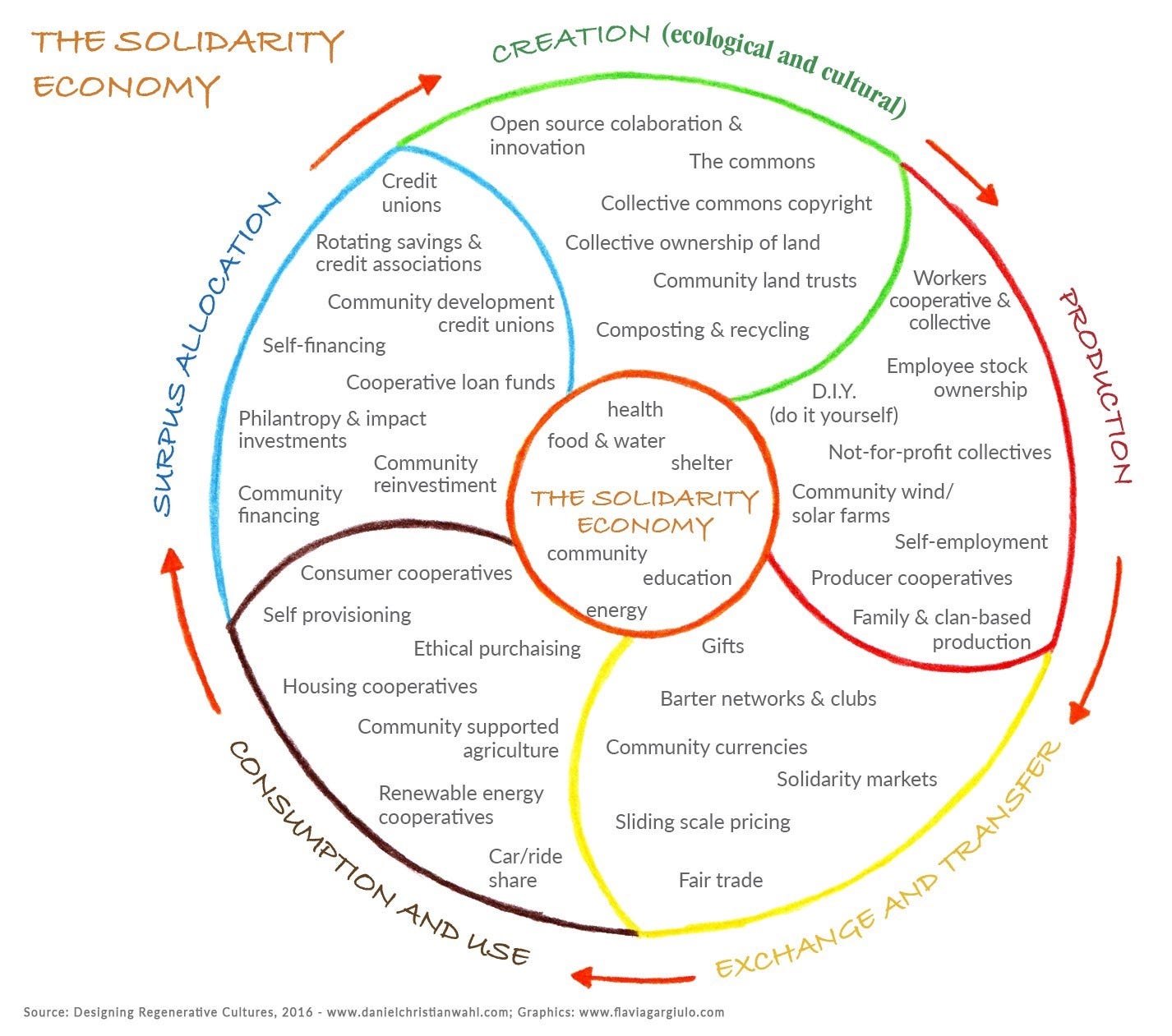
The concept underpins the so-called solidarity economy principles, where communities organize around mutual benefit rather than individual gain. Supporters believe that solidarity-based economic models—whether cooperatives, mutual aid networks, or social enterprises—can correct injustices and redistribute resources more fairly. UN research on the social and solidarity economy situates such approaches as central to efforts at both poverty reduction and environmental sustainability.
Yet for all the aspirational language, the case for economic solidarity is not without complication. When examined critically—with examples drawn from the World Bank’s own addresses on solidarity—the gap between rhetoric and reality becomes clear. The push for “solidarity” too often overlooks entrenched economic hierarchies or the simple fact that, in global markets, not all partnerships are equal. Programs intended to nurture thriving communities and solidarity economies sometimes run aground on hard questions of who sacrifices, who benefits, and what happens when solidarity is at odds with profit.
Some propose entirely new models—what one think tank terms a “solidarity new social settlement”—that would institutionalize cooperation at the heart of policy. Research from the ILO on cooperative enterprises describes the significant impact that shared-ownership businesses can have on stability and resilience, especially during economic downturns. However, a growing body of critical scholarship—including recent articles in Sustainable Production and Consumption—points out that efforts to mainstream solidarity economies often encounter resistance from entrenched interests, legal structures, and cultural expectations about individual versus collective well-being.
In practice, economic solidarity can sometimes appear as another ideal—persuasive in theory, messier in execution, and always at risk of being co-opted or diluted by the very market forces it seeks to temper. The promise of solidarity may offer inspiration, but its full realization inside complex, competitive economies remains far from assured.
Comparing Governance Models Across Cultures
Governance is often positioned as the mechanism that translates solidarity—or its absence—into lived reality, yet the ways societies organize themselves to wield power and make decisions are anything but uniform. Scholars and policymakers point to a spectrum of models, from the centralized and cooperative to the fragmented and competitive. The 4 Cs global governance framework categorizes arrangements by how authority is shared, enforced, and legitimated, illustrating how centralization or decentralization can dramatically shift accountability and outcomes.
In a world where challenges are increasingly transnational, thinkers project an array of emerging models for international governance, from multipolar negotiations and decentralized networks to innovative forms of public-private partnership. These experimental models often collide with entrenched interests, national sovereignty, and uneven power, raising the question of whose interests are actually served when old structures give way.
Governance norms extend well beyond statecraft. Comparative research demonstrates that corporate governance is shaped by cultural factors as much as by law or policy, meaning that the effectiveness of institutional frameworks can vary dramatically even in similar economic environments—what works in consensus-driven cultures may not translate to more adversarial contexts.
The Role of the UN: Framing Human and Indigenous Rights
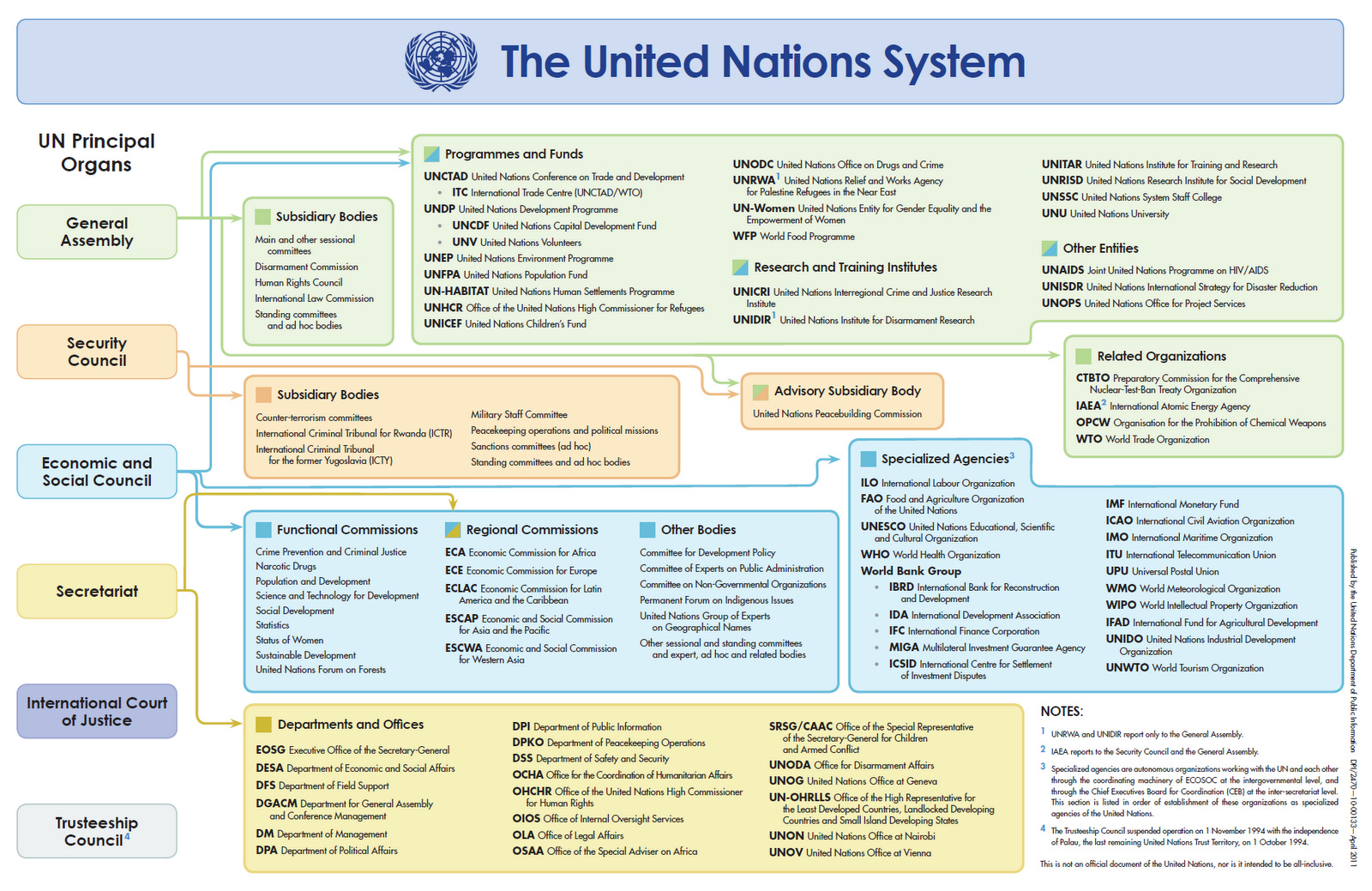
Despite its ambitious global mandate, the United Nations continually grapples with issues of corruption and internal accountability, which fundamentally undermine its credibility and capacity to enforce a top-down approach to reform or even consistently uphold the UN Charter. Instances such as the whistleblowing scandal involving Finland highlight systemic failures to protect those who expose misconduct. Concerns remain acute in agencies like UNRWA, where allegations of serious mismanagement and fraud have prompted calls for reform from both member states and civil society. Internal mechanisms, such as those implemented by the UN Environment Programme, aim to improve audit processes and transparency; however, these efforts are frequently hamstrung by bureaucratic inertia and competing interests. Funding structures further complicate oversight, with research from the Brookings Institution and Congressional studies illustrating how reliance on voluntary contributions and complex aid flows can dilute accountability. These persistent integrity challenges make it difficult to achieve meaningful, system-wide reforms and illustrate the tension between national sovereignty, vested interests, and the UN’s foundational principles.
Public opinion is another variable, as revealed by comparative global surveys on attitudes to governance systems. Support for democracy, technocracy, and even authoritarianism fluctuates sharply by region, generation, and recent experience, underscoring the fundamentally context-dependent nature of governance legitimacy.
Even the principles that underpin “good governance”—like transparency, accountability, participation, and rule of law—are subjects of ongoing debate and study, and actual implementation often falls short. As critical voices note, there can be a tension between global best practices and local norms, or between formal institutional ideals and everyday realities. Recent cross-country comparative research underlines that, for all the rhetoric, no model is universally effective or immune to capture by vested interests.
What emerges is not a clear endorsement of any one approach but a patchwork of evolving experiments, each shaped profoundly by history, culture, and material circumstances. In this light, the hope that governance can impose effective solidarity appears optimistic—at best, governance offers only provisional answers to questions that are as political as they are technical.

UNDRIP
Land rights remain a deeply contentious and morally significant issue on the global agenda, underscored by evolving international standards like the United Nations Declaration on the Rights of Indigenous Peoples. UNDRIP affirms the right of Indigenous peoples to own, use, and control the lands and resources they have traditionally occupied, challenging longstanding doctrines of absolute private property and state sovereignty. As highlighted by Indigenous Watchdog and the Assembly of First Nations, recognition of Indigenous title is not only a human rights imperative, but also central to reconciliation and legal clarity. At the same time, legal scholars caution that the reinterpretation of property rights can introduce uncertainty and sometimes conflict with the interests of individuals and entities who have long invested in, developed, or maintained stewardship over these lands under established legal regimes. There are further concerns regarding corruption and lack of transparency in both state and tribal processes, as discussed by the Justice Project and cases of negotiated benefits agreements that sometimes blur the line between fair compensation and undue influence. Ultimately, efforts to resolve competing land claims must strive for both justice and practical fairness: this means upholding Indigenous self-determination and community land rights, as outlined in global baselines like the Rights and Resources Initiative, while also respecting the investments, livelihoods, and good-faith contributions of those who have lived on or supported these lands for generations. Such tensions underscore the need for institutions like the United Nations to evolve, ensuring that principles of equity and accountability are not lost amid the complexities of global peacekeeping and reform.
From Peacekeeping Triumphs to Systemic Challenges: Why the UN Needs Reform at 80
The United Nations has reached its 80th year at a time of unprecedented global complexity, marked by both notable achievements and persistent failures in upholding the aims of the UN Charter. Scholars and practitioners have debated the record of UN peacekeeping, which, as detailed in works like The Oxford Handbook of United Nations Peacekeeping Operations, has demonstrated both striking durability and recurring limitations, from Cambodia and Liberia to high-profile failures in Rwanda and more recently in Ukraine and Sudan. The need for reform is now urgent, as illustrated by the CSCR assessment of UN peacekeeping reforms, which evaluates initiatives like the Brahimi Report, the HIPPO Report, and the Action for Peacekeeping (A4P) agenda. At the same time, the organization is grappling with an unprecedented financial crisis, forcing a wave of reforms and cutbacks that threaten to undermine the multilateral structure built since 1945. Analysts warn, such as in the Council on Foreign Relations global memo and the International Crisis Group’s ten challenges for the UN, that the effectiveness of future peacemaking depends on political will, improved mandate clarity, Security Council reform, and greater coherence among member states. As the UN endeavors to address both legacy and emerging challenges—from protracted conflicts to new threats like artificial intelligence—the enduring call is for reforms that are not merely institutional or financial, but also reflect a renewed collective commitment to global peace and security.
The Nature of Man in Economic Context
The economy, at its core, is not a machine but a reflection of human nature. As Michael Matheson Miller argues, economics must be understood as a human discipline before a technical one, because man is both an individual subject and a social being. This duality—unique personhood combined with relational dependence—creates the tension that defines economic life. We are neither isolated atoms nor indistinct parts of a collective; we are “substance‑in‑relationship,” and this reality resists simplistic top‑down design.
Top‑down economies, whether Marxist or bureaucratic, attempt to subsume individuality into a collective vision. Adam Smith warned against the “man of system” who treats society like chess pieces, imposing order from above without regard for the lived agency of individuals. Such systems inevitably suppress minorities and dissenting voices, because uniformity is prized over diversity. The UN’s collectivist frameworks often replicate this problem: lofty declarations of solidarity mask structural imbalances, leaving marginalized groups voiceless within bureaucratic consensus.
Experimental economics shows that humans are not purely self‑interested calculators; our most compelling trait is sociality. We barter, cooperate, and build institutions, but we also compete, seek status, and regress into punitive behaviors when threatened. Regenerative economics highlights that human nature is shaped by systems: societies that reward competition foster selfishness, while those that nurture cooperation cultivate empathy. Thus, economic design must acknowledge both our capacity for true solidarity and our susceptibility to exploitation.
The Failure of Marxist Solidarity
Marxist solidarity presumes that shared material interests alone can bind people together. Yet, solidarity requires more than class alignment—it demands moral commitment, mutual identification, and loyalty. Marxist frameworks often ignore race, culture, and ethical dimensions, reducing solidarity to economic determinism. This narrowness has fractured movements, leaving minorities suppressed and class divisions unresolved. The UN’s attempts at global solidarity suffer similarly: without authentic buy‑in from diverse peoples, collective pledges become hollow, enforced by punitive measures rather than genuine participation.
The struggle between individual and societal rights is perpetual. Man requires dignity and solidarity, but dignity cannot be coerced. Violence or expropriation without recourse violates the moral foundation of economic exchange. Smith’s principle of natural liberty—free exchange of goods, ideas, and sentiments—remains essential. True solidarity arises not from imposed collectivism but from voluntary cooperation, where individuals respect one another’s rights while pursuing shared well-being.
Solidarity Across Cultures: A Comparison
Indigenous advocates, whether connecting across borders as in the Indigenous for Palestine campaign or building coalitions like the Indigenous Coalition’s solidarity actions, know that global slogans rarely translate into local justice. Even in cases chronicled by Aspen Community Solutions or traced through the forgotten history of Black and Indigenous freedom movements, the question lingers: can solidarity resolve disputes when land, power, and survival are at stake?
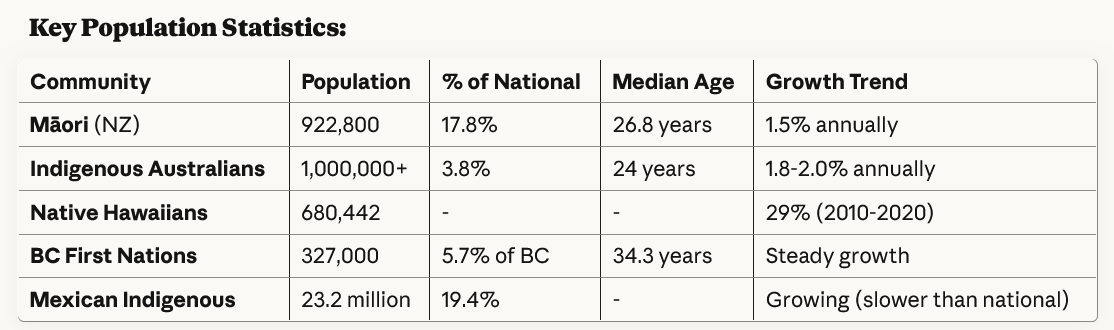
For example, the needs of the Māori in New Zealand are not the same as those of Indigenous communities in British Columbia, Hawai‘i, or Mexico. Each group’s history, relationship to land, legal context, and aspirations are distinct. What counts as justice or restoration in one place may look entirely different in another, even where broad declarations of solidarity are made. Efforts to build pan-Indigenous or global alliances, as highlighted by various regional solidarity initiatives, often run aground on this central truth: universality risks erasing the very differences that give each struggle its shape and meaning.

Conclusion
In the end, solidarity in international politics remains as much aspiration as achievement. The rhetoric of unity—whether from the United Nations or grassroots campaigns—struggles to carry real weight when tested against hard realities: contested land, economic self-interest, cultural complexity, and uneven power. History shows that solidarity is always rooted in local realities; any global institution that hopes to make a difference must first engage deeply with the specific conditions, histories, and needs on the ground. Framing justice in simple binaries—us versus them, local versus global—inevitably falls short, because genuine progress refuses to fit such narrow terms. Instead of seeking a universal answer, perhaps it’s time to embrace the truth that real progress comes from listening to difference, negotiating with humility, and putting our shared humanity at the center of the conversation. Solidarity, when it exists, is not imposed from above—it is built, imperfectly, from the ground up, honoring both common hopes and the unique complexities that shape each community.