The Web That Held the World
Ghosts of ’84

Introduction
The political legacy of the Nehru-Gandhi family is typically analyzed through the prism of domestic statecraft—dynastic succession, democratic centralization, and secular nationalism. However, this perspective overlooks the critical transnational networks that sustained the family’s elite status across generations. This piece re-examines the dynasty by tracing its structural and ideological ties to Europe, a continent that served alternately as an intellectual cradle, a diplomatic theater, and a refuge for the family’s inner circle. Furthermore, it investigates how this Euro-centric political elite navigated the realities of state capitalism by intersecting with two distinct eras of corporate power: the foundational, nation-building partnership with the Tata family, and the subsequent, highly controversial entanglement with the transnational Hinduja Group. By analyzing these parallel relationships, we uncover a complex matrix where post-colonial political authority relied heavily on both legacy industrial capital and global financial networks.
Italian Connections
Indira Gandhi’s most significant Italian connection was rooted in her deep bond with her daughter-in-law, Sonia Gandhi. She mentored Sonia in Indian culture and politics through a relationship Sonia described as a profound friendship. Beyond the family circle, the most influential Italian figure in her life was the businessman Ottavio Quattrocchi, a representative for the firm Snamprogetti who enjoyed unprecedented access to the Prime Minister’s residence. While this closeness provided Indira with a loyal confidant during her political isolation in the late 1970s, the relationship eventually became the focal point of the Bofors Scandal, a landmark case of alleged corporate kickbacks and institutional entanglement. On an intellectual level, Indira also maintained a complex, high-stakes rapport with the legendary Italian journalist Oriana Fallaci, whose incisive interviews captured a rare, unvarnished side of the Prime Minister’s personality.
The European Orbit of the Nehru-Ghandis
Before connecting them to corporate houses, it is factually critical to ground the Gandhi family’s deep, intrinsic relationship with Europe. For over a century, Europe was not just a vacation spot for the family; it was an intellectual cradle, a medical refuge, and eventually, a literal familial connection.
The Intellectual Foundation: Motilal Nehru and his son Jawaharlal were deeply Anglophile in their early lives. Jawaharlal was educated at Harrow and Trinity College, Cambridge. His foundational understanding of Fabian socialism—which dictated India’s post-independence economic policy—was born in the UK.
The Swiss Refuge: Throughout the 1920s and 1930s, the family routinely decamped to Switzerland (specifically Geneva and Lausanne) for prolonged periods, primarily for the treatment of Nehru’s wife, Kamala, who suffered from tuberculosis. Indira Gandhi spent critical formative years in Swiss schools and later studied at Somerville College, Oxford.
The Continental Alignment: Decades later, Rajiv Gandhi’s marriage to Sonia Maino, an Italian national, cemented a permanent, literal European lineage into the family.
For the Gandhis, Europe was a place of privacy, elite socialization, and intellectual formation away from the suffocating pressures of Indian politics.
The Gandhi-Tata Nexus: Old Capital & Sovereign Idealism
The relationship between the Gandhis and the Tatas represents the era of paternalistic, domestic industrialization. It was rooted in a shared, mid-century belief that a newly independent India required massive infrastructure, which only state-directed planning and trusted domestic conglomerates could provide.
The Shared Swiss Ground: The connection was deeply personal before it was political. J.R.D. Tata (the legendary chairman of the Tata Group) was born in Paris to a French mother. He spoke fluent French, loved Europe, and spent vast amounts of time in Switzerland. During the 1930s, when Jawaharlal Nehru was in Switzerland caring for his ailing wife, J.R.D. Tata was often in the same alpine regions. They developed a mutual, aristocratic respect for one another.
The Economic Marriage: When Nehru became Prime Minister, he championed a socialist, state-controlled economy (the “License Raj”). While this stifled many businesses, Nehru deeply trusted the integrity of the Tatas. The Air India story is a perfect example: J.R.D. Tata founded Tata Airlines, Nehru nationalized it in 1953 to create Air India, but explicitly asked J.R.D. to remain as its chairman, a position he held for decades.
The Euro-Indian Bridge: Both Nehru and J.R.D. Tata used their European sensibilities to present India to the West. They were elite, cosmopolitan figures who could negotiate with European heads of state and industrial tycoons on equal cultural terms.
The Gandhi-Hinduja Nexus: The Shift to Transnational Capital
By the late 1970s and 1980s, the global economy was shifting, and so did the nature of the Gandhi family’s corporate intersections. Enter the Hinduja family—merchants who originally built their fortune in Iran but fled the 1979 Islamic Revolution to establish their empire in London and Geneva.
Unlike the Tatas, who manufactured steel and cars inside India, the Hindujas operated as consummate global facilitators, trade financiers, and cross-border dealmakers.
The Expatriate Power Broker: When Rajiv Gandhi became Prime Minister in 1984, he sought to modernize India’s economy and military. This required international procurement. The Hinduja brothers (Srichand, Gopichand, Prakash, and Ashok), operating from their massive bases in the UK and Switzerland, positioned themselves as the ultimate bridge between Western corporate interests and the Indian state.
The Bofors Intersection: The relationship became a matter of historical record during the 1987 Bofors scandal. The Indian government signed a $1.4 billion contract with the Swedish arms manufacturer Bofors to supply howitzer guns. Swedish Radio subsequently revealed that massive kickbacks had been paid to middlemen to secure the deal.
The European Financial Trail: The subsequent Swiss and Indian investigations factually established that millions of dollars from Bofors had been funneled into Swiss bank accounts tied to the Hinduja brothers (as well as Italian businessman Ottavio Quattrocchi, a close friend of Sonia Gandhi). While the Hindujas maintained that the funds they received were completely unrelated to the gun deal and were for separate consultancy services, the scandal permanently linked the Rajiv Gandhi administration to European-brokered defense procurement.
The Hinduja Family - Bofors - Iran
The Iranian Era (1919–1979)
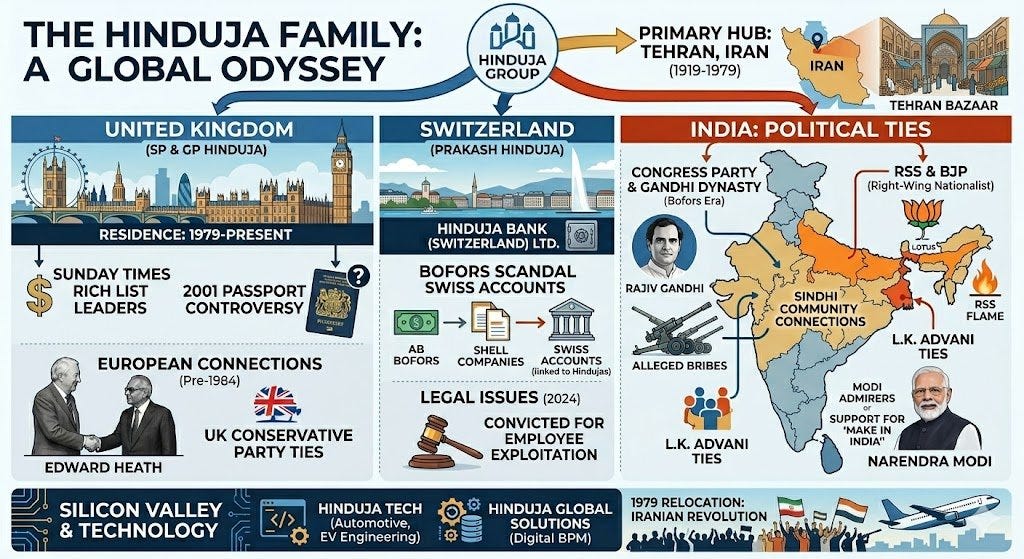
The financial foundations of the Hinduja Group were established by the patriarch, Parmanand Deepchand Hinduja, who relocated the business from Sindh to the Tehran Bazaar in 1919.
Merchant Trading and Infrastructure
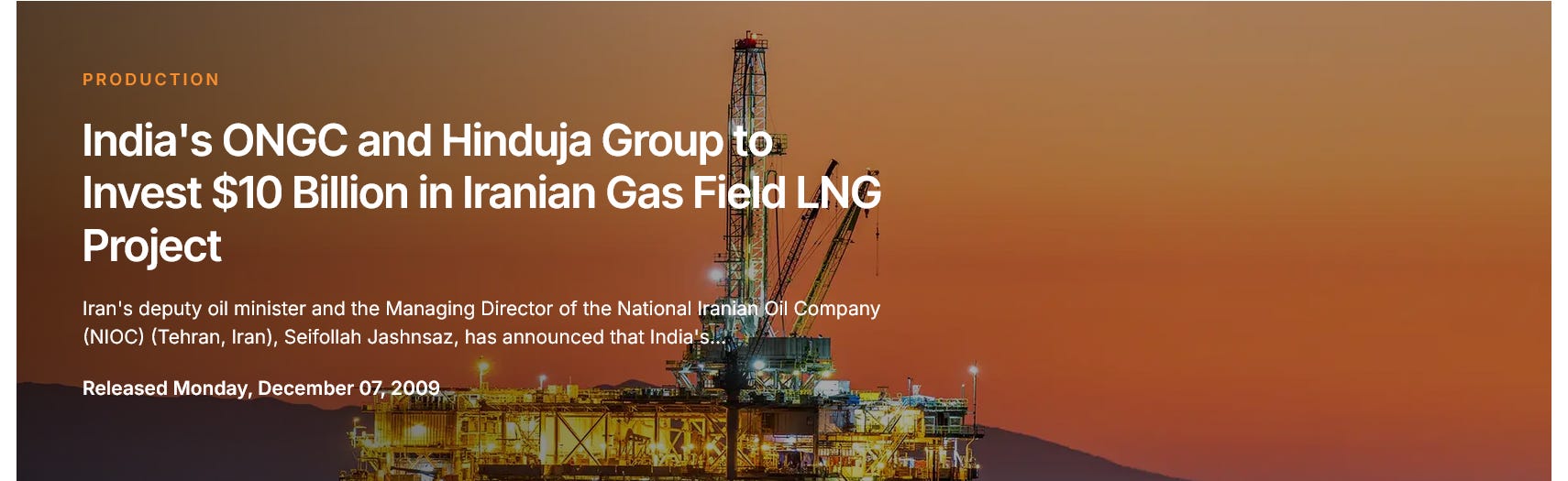
Initially acting as commodity merchants, the family gained a monopoly over specific import-export corridors between British India and the Middle East, moving vast quantities of textiles, tea, and spices. As the family embedded themselves into the local economy, they transitioned into state-level trade procurement and infrastructure financing. They established a close working relationship with the government of Shah Mohammad Reza Pahlavi, acting as key commercial intermediaries for Iranian oil-barter arrangements and state-supported commodity purchases.
The Bollywood Monetization Strategy
A highly unique and lucrative wing of their pre-revolution operations was the commercialization of Indian pop culture. The Hindujas purchased the exclusive distribution rights for Bollywood films across Iran and the broader Middle East. By dubbing and subtitling these films into Persian (Farsi), they tapped into a massive, highly profitable consumer market that generated deep liquidity for the family throughout the mid-20th century.
Primary Corporate Record: Detailed timelines of their migration from Sindh to Tehran, their merchant networks under the Shah, and their subsequent 1979 flight from the Islamic Revolution can be verified directly via the
The European Shift & Swiss Banking Legal Realities (1979–Present)
Following the 1979 Islamic Revolution, the family redirected their massive liquid capital reserves away from Tehran, splitting their operations between London and Geneva.
The Swiss Wealth Hub
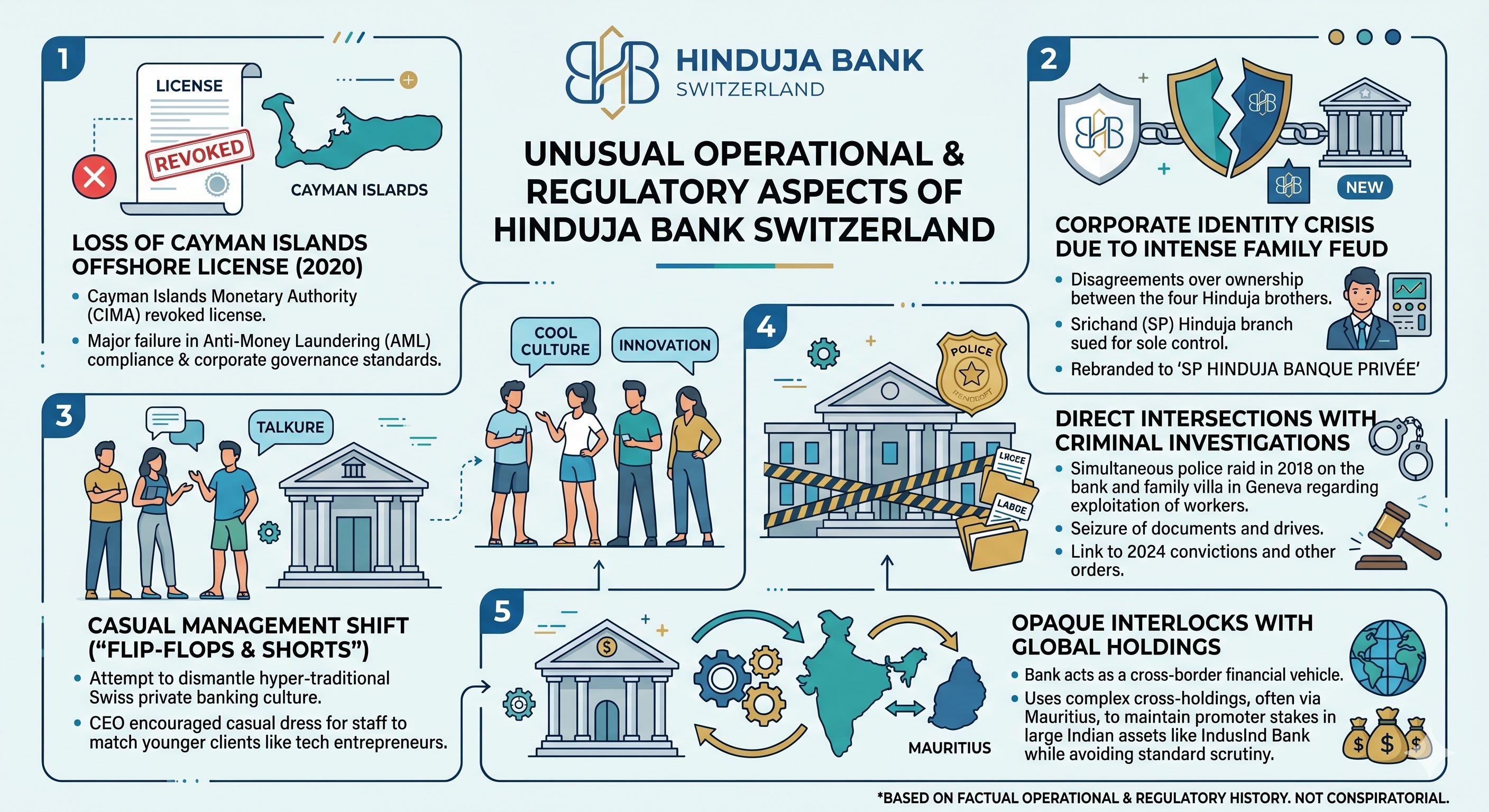
In Geneva, Prakash Hinduja established their European wealth management operations, which eventually culminated in the creation of Hinduja Bank (Switzerland) Ltd. However, this Swiss footprint has been subject to heavy legal scrutiny regarding labor practices at their private estates.
2024 Legal Conviction
In June 2024, a Swiss criminal court in Geneva convicted four prominent members of the Hinduja family—Prakash Hinduja, his wife Kamal, their son Ajay, and daughter-in-law Namrata—of exploiting vulnerable domestic staff. The court found them guilty of unauthorized employment, underpaying workers (sometimes paying less than 10% of standard Swiss wages), and restricting their freedom, resulting in prison sentences ranging from 4 to 4.5 years.
Primary Legal and Media Record: For extensive coverage of the Swiss court proceedings, the specific sentencing details, and the family’s defense statements, see the
BBC News Investigation on the Hinduja Geneva Convictions
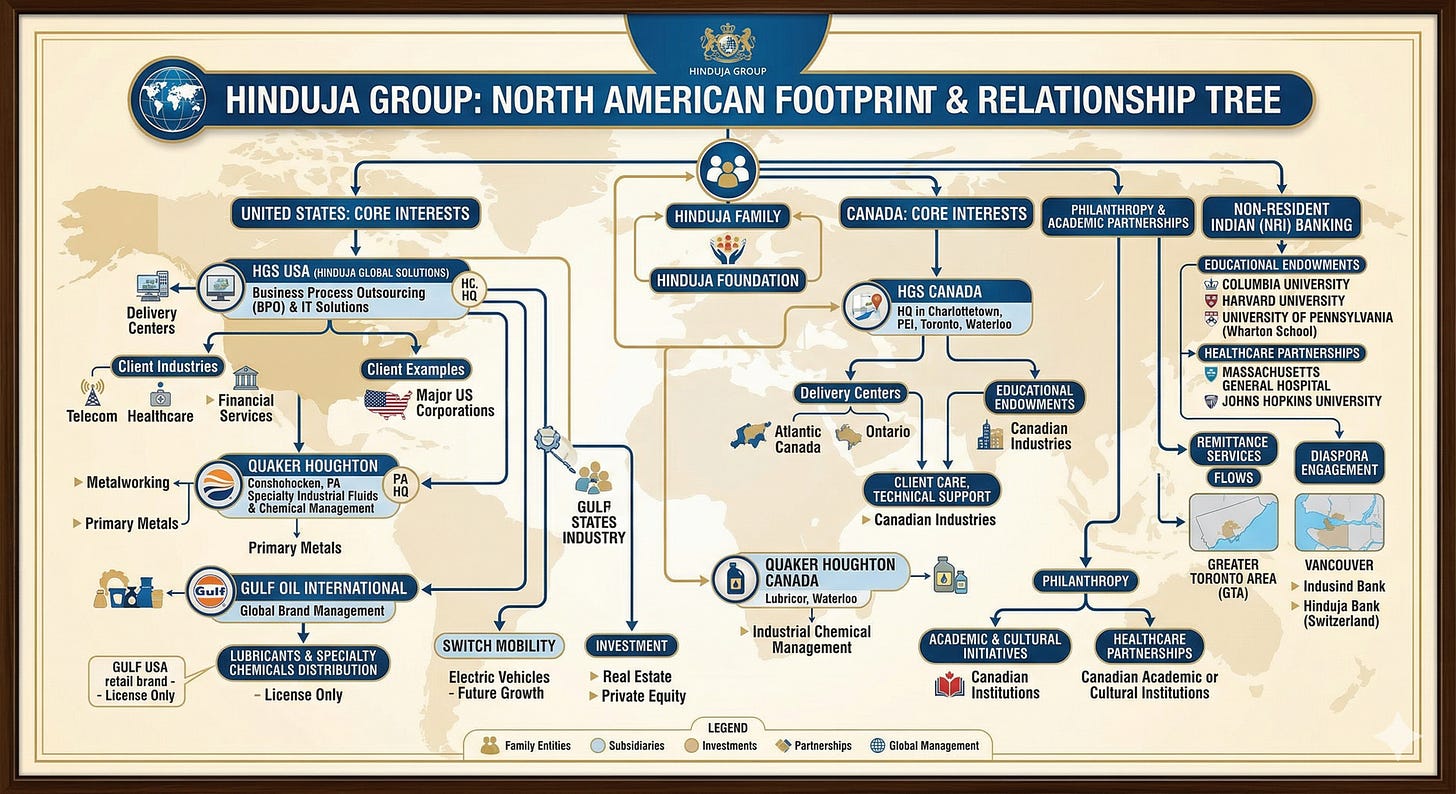
Present Evolution of a Family Dynasty - now in BC
Indian Geopolitics: Bofors and Nationalist Ties
The family’s interactions with Indian political parties span decades, illustrating their agility in maintaining access across shifting regimes.
The Bofors Scandal (Congress/Gandhi Era)
During the administration of Prime Minister Rajiv Gandhi in the late 1980s, the Hindujas were heavily implicated in the historic Bofors defense procurement scandal. Investigators from India’s Central Bureau of Investigation (CBI) alleged that the Swedish arms manufacturer AB Bofors paid millions of dollars in illicit commissions into secret Swiss bank accounts controlled by the Hinduja brothers to secure a $$1.3$ billion howitzer artillery contract. The long-running scandal ultimately crippled Rajiv Gandhi’s political standing and led to his electoral defeat in 1989.
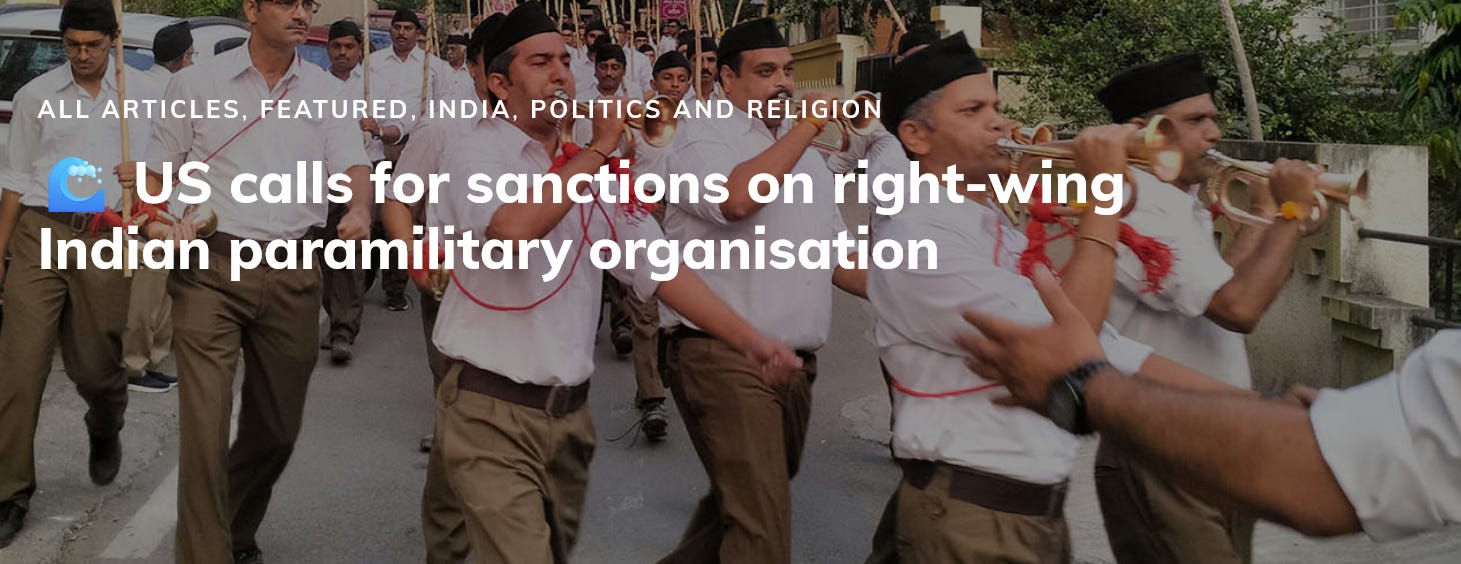
Ties to the RSS and BJP
Beyond their interactions with the Congress Party, the family shares deep structural and cultural links with India’s right-wing nationalist ecosystem. As members of the Sindhi diaspora, they maintained a long-standing relationship with senior leaders of the Bharatiya Janata Party (BJP), such as L.K. Advani. In the modern era, the family has aligned its heavy industrial assets—such as the commercial vehicle manufacturer Ashok Leyland—with Prime Minister Narendra Modi’s “Make in India” economic nationalist directives.
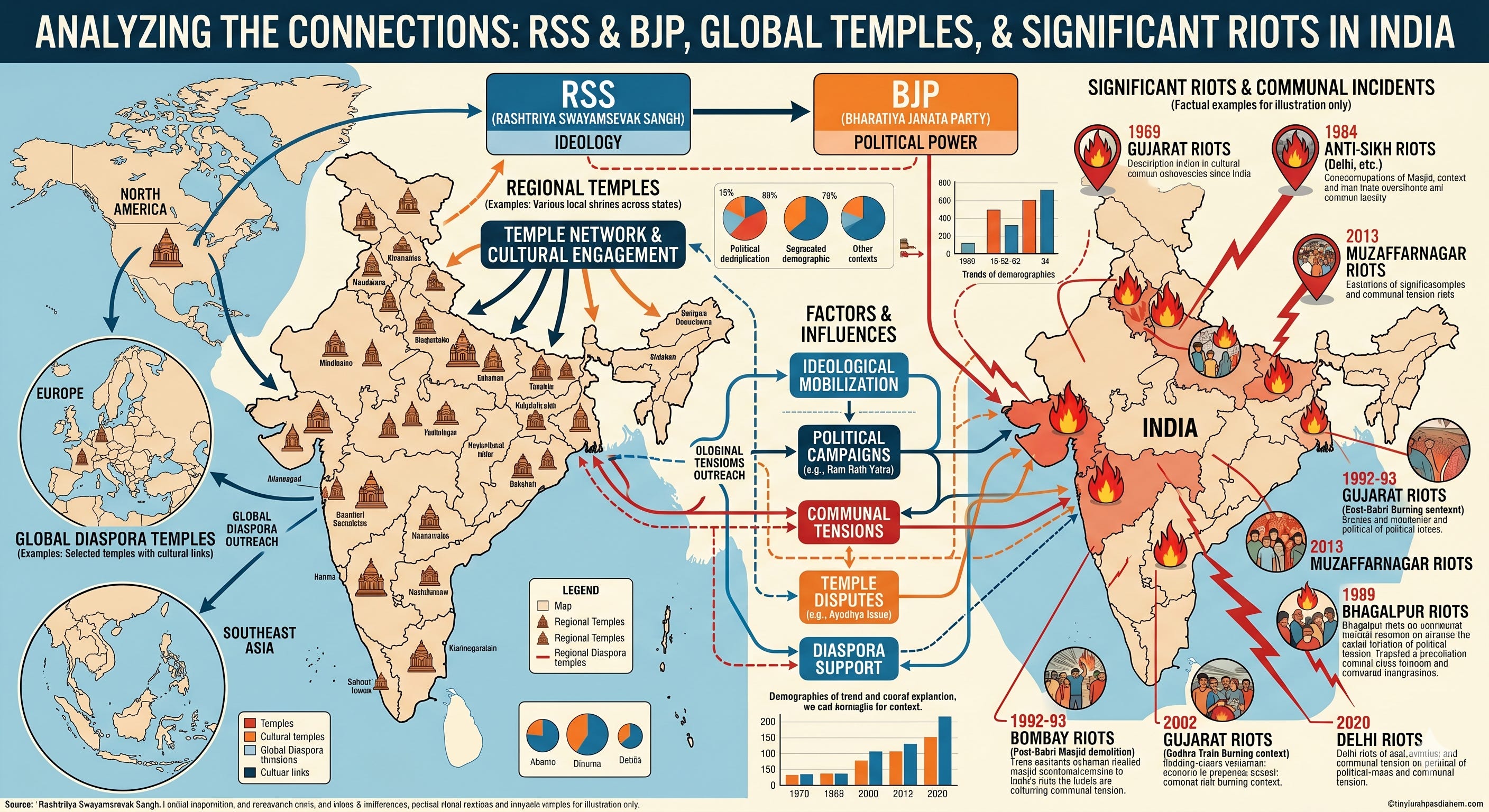
The legacy of the RSS and BJP - For a background on religious soft power, through BAPS.
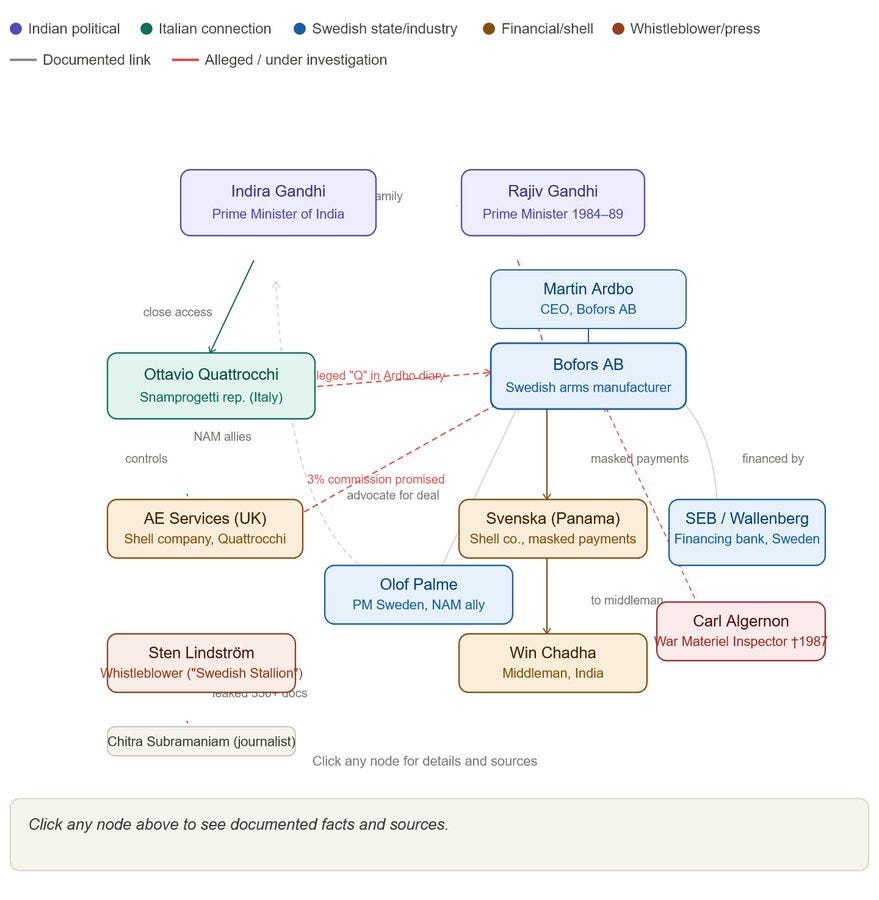
The Bofors Scandal and the Swedish Connection
The Bofors scandal, which surfaced in 1987, remains a definitive case study in the “corporate entanglement” between a private industrial giant and high-ranking government officials across two continents. At its core, the scandal involved allegations that the Swedish arms manufacturer Bofors AB paid massive kickbacks to secure a $1.4 billion contract for 410 howitzers for the Indian Army.
Key Swedish Figures and Institutional Links
The scandal was not merely a matter of private bribery; it implicated the highest levels of the Swedish state and its industrial architecture.
Martin Ardbo (CEO of Bofors AB): Ardbo was the central architect of the deal. His personal diaries, later seized by Swedish investigators, became critical evidence. These journals contained cryptic references to “Q” (Ottavio Quattrocchi) and “R” (Rajiv Gandhi), detailing the high-stakes pressure to protect these links.
Olof Palme (Prime Minister of Sweden): As Prime Minister, Olof Palme was a vocal advocate for the deal, seeing it as a way to secure the Swedish defense industry. Investigations later suggested a potential quid-pro-quo where Bofors allegedly agreed to pay into a Swedish foundation, Bergslagsfonden, to promote regional industry as part of the deal’s broader financial architecture.

Sten Lindström (The Whistleblower): As the former head of the Swedish National Investigation Department, Lindström was the official who leaked over 350 sensitive documents to the press. Operating under the pseudonym “The Swedish Stallion,” he provided the primary evidence of the payoffs to journalist Chitra Subramaniam.
Carl Algernon (War Materiel Inspector): The official responsible for monitoring Swedish arms exports, Algernon died mysteriously in January 1987 after being struck by a subway train in Stockholm, just weeks before the scandal broke. His death remains a point of intense speculation regarding the length to which individuals went to keep the institutional links of the deal hidden.

The NAM movement. - The non-aligned movement.
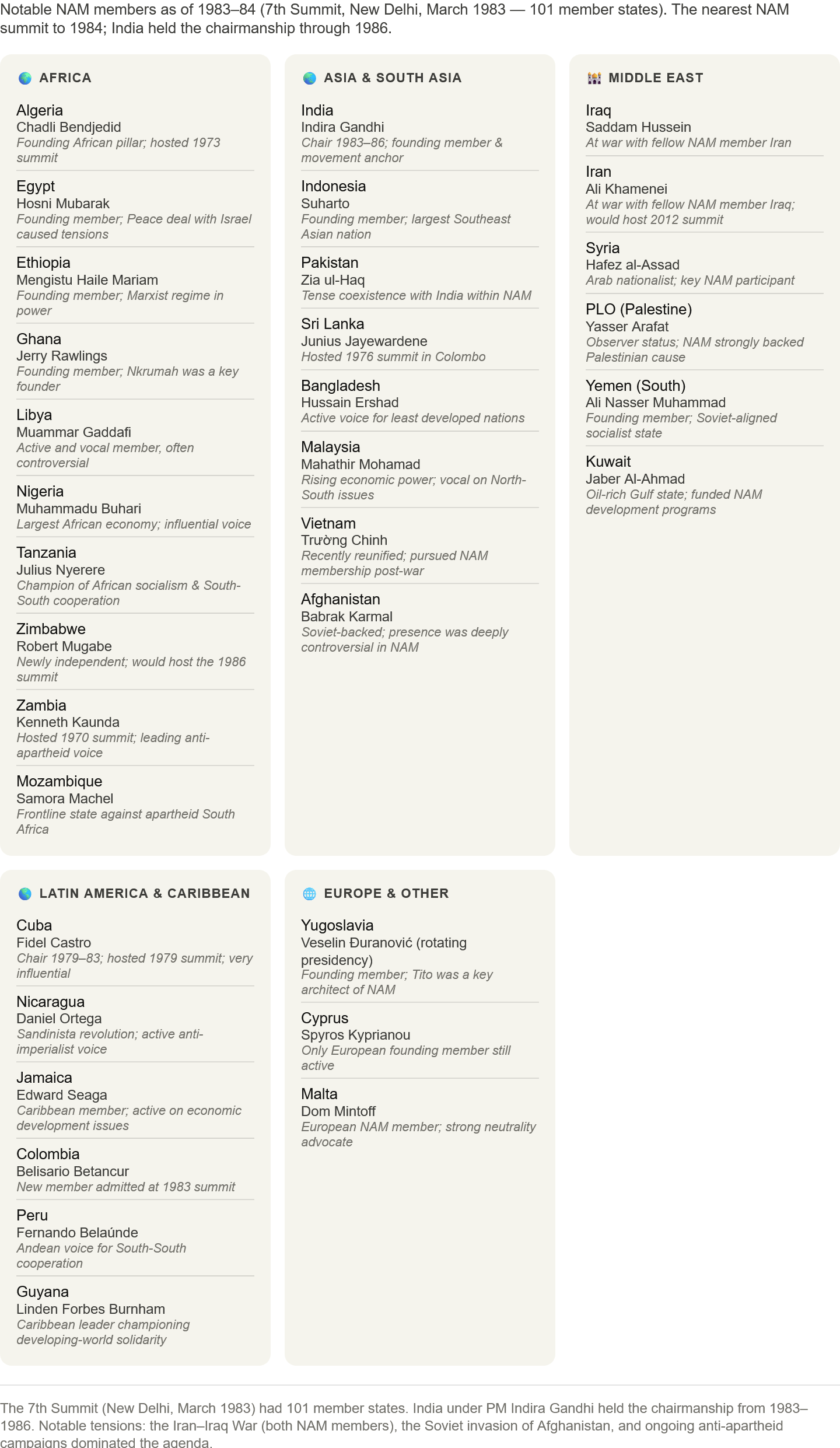
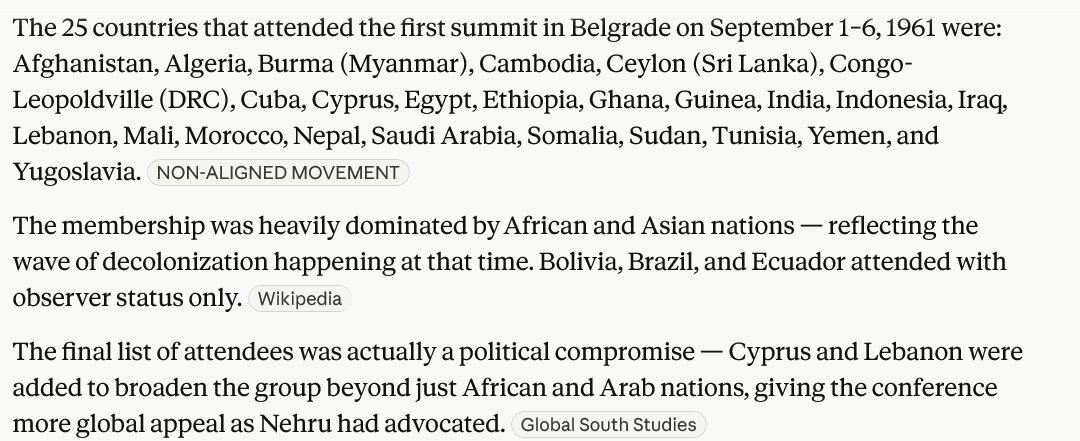
The Olof Palme Mediation: The relationship was uniquely facilitated by the ideological “bridge” between Indira and Swedish PM Olof Palme. Palme, a staunch ally of Indira in the Non-Aligned Movement, acted as a diplomatic guarantor for the Wallenberg family’s interests, effectively blending Swedish statecraft with private industrial power.
While the movement was famously co-founded by Jawaharlal Nehru (the grandfather of Indira Gandhi and great-grandfather of Rajiv Gandhi), subsequent Indian leaders continued to champion its core principles of sovereignty and anti-colonialism. During the 1970s and 1980s, European leaders like Sweden’s Prime Minister Olof Palme and Canada’s Prime Minister Pierre Trudeau shared a deep ideological affinity with the movement. Though their respective Western nations remained tied to or aligned with the West, both Palme and Trudeau frequently broke ranks with Washington to advocate for North-South economic justice, common security, and global disarmament, acting as crucial diplomatic bridges between the developed West and the non-aligned nations of the Global South.
The 1980s: Canadian Apathy and Legal Rigidities
Under Pierre Trudeau (up to 1984), the Canadian state treated the growing Khalistani militancy within its borders as a remote, internal Indian problem. As detailed previously, Trudeau’s 1982 refusal to extradite Talwinder Singh Parmar—citing technical legal barriers under the Fugitive Offenders Act because India was a republic—allowed the eventual mastermind of the Air India bombing to operate freely.
When Brian Mulroney assumed office and Air India Flight 182 was brought down in June 1985, the systemic blind spots of the Canadian establishment became starkly visible. In a telling historical detail, Mulroney immediately called Indian Prime Minister Rajiv Gandhi to offer condolences for India’s loss. This move drew severe domestic criticism because the vast majority of the 329 victims were Canadian citizens of Indian descent. The Canadian state initially viewed its own citizens through an essentialist lens, treating a domestic security failure as an exoticized foreign tragedy. The full structural failures of this era are thoroughly cataloged in the Commission of Inquiry into the Investigation of the Bombing of Air India Flight 182, which details the severe coordination gaps between Canadian intelligence and law enforcement.
Today: Aggressive Extrajudicial Transnational Reach
The contemporary landscape demonstrates a radical shift. India no longer relies on pleading for extraditions or navigating the legal rigidities of Ottawa. Operating with deep intelligence networks and structural assertiveness, modern Indian state agencies stand accused by Western intelligence of bypassing Western sovereignty entirely to neutralize perceived threats.
The historical irony is complete: a nation that once complained of Canada harboring extremists now actively projects asymmetric power directly into Canadian territory, treating Western borders with the same disregard that Western intelligence agencies have historically shown toward the Global South. This shifting dynamic and its impact on modern diaspora communities can be tracked through updates from Library and Archives Canada, which maintains evolving records on Canada-India diplomatic history.
The Israel Surveillance Alliance vs. Historical Palestinian Solidarity
One of the sharpest ideological transformations is India’s migration away from its foundational diplomatic positions.
[1947–1992: The Anti-Colonial Stance]  ────────► [Modern Era: The Technocratic Realpolitik]
• First non-Arab state to recognize PLO.         • Multi-billion dollar defense relationship.
• Strong foundational ties to Palestinian cause. • Co-development of drones and border barriers.
• Shared identity as victims of colonialism.     • Deployment of advanced AI and cyber-intelligence.
The Anti-Colonial Alignment: Historically, India’s relationship with Palestine was deeply rooted in the anti-colonial struggle. India was the first non-Arab state to recognize the Palestine Liberation Organization (PLO) as the sole legitimate representative of the Palestinian people. For decades, New Delhi viewed Zionism through a critical lens, associating it with Western imperialist partition strategies. The irony/hypocrisy is not lost on the world as you monitor sikhs abroad.
The Strategic Shift: Today, India maintains a highly sophisticated security, defense, and intelligence alliance with Israel. This partnership is anchored by the acquisition and deployment of advanced electronic warfare tools, automated border monitoring technology, and cyber-surveillance capabilities (such as Pegasus).
The Crucial Irony: The state machinery that once championed liberation struggles across the Global South now uses imported, combat-tested occupation technologies to secure its own borders, monitor domestic populations, and track dissident diaspora networks abroad. This profound ideological and technical shift is closely analyzed in defense policy briefs by the Manohar Parrikar Institute for Defence Studies and Analyses (MP-IDSA).
The Collapse of the Non-Aligned Movement (NAM)
The Non-Aligned Movement was built on the Panchsheel (Five Principles of Peaceful Coexistence), jointly formulated by India’s Jawaharlal Nehru and China’s Zhou Enlai in 1954. It was designed to resist superpower hegemony, respect territorial integrity, and champion mutual non-aggression.
Where is the NAM when India and China act imperially?
NAM is effectively a defunct geopolitical relic because its founding giants have evolved into the very centers of gravity the movement was built to oppose. Both nations now project power through distinct, competing forms of regional and global expansionism:
China’s Geo-Economic Imperialism: China utilizes asymmetric infrastructural debt diplomacy and global state-backed logistics networks (such as the Belt and Road Initiative) to secure resource monopolies and territory, effectively operating as an economic empire across Asia, Africa, and Latin America.
India’s Regional Hegemony: India increasingly asserts a Monroe Doctrine-style sphere of influence over South Asia and the Indian Ocean, utilizing its growing economic clout and defense footprint to counter Chinese encirclement while projecting extrajudicial power across Western borders.
The Structural Paralysis
NAM cannot act or speak against this because it is structured around the principle of consensus among global South nations. It possesses no institutional mechanism to police or penalize its own founders when they adopt major-power behaviors.
Because both India and China have abandoned strategic non-alignment in favor of multi-alignment—where they selectively partner with Western blocks, Russian defense frameworks, or Middle Eastern intelligence hubs—the movement has been hollowed out. The collective moral authority that leaders like Nehru and Indira Gandhi once wielded can be reviewed in historical transcripts via the Indian Ministry of External Affairs Media Center. This moral posturing has been entirely replaced by a hard-nosed, technocratic realpolitik, leaving the ideals of the 1983 New Delhi Summit behind as both nations prioritize unilateral expansion.
The Architecture of the Bofor Payoffs - Global Arms & Financial Skin in the Game
The Bofors scandal illustrated a sophisticated use of shell companies and front organizations to bypass India’s ban on middlemen. Bofors utilized a network that included:
AE Services (UK): A front linked to Quattrocchi, which was promised a 3% commission if the contract was signed by a specific deadline.
Svenska (Panama): A company used to mask payments to the middleman Win Chadha.
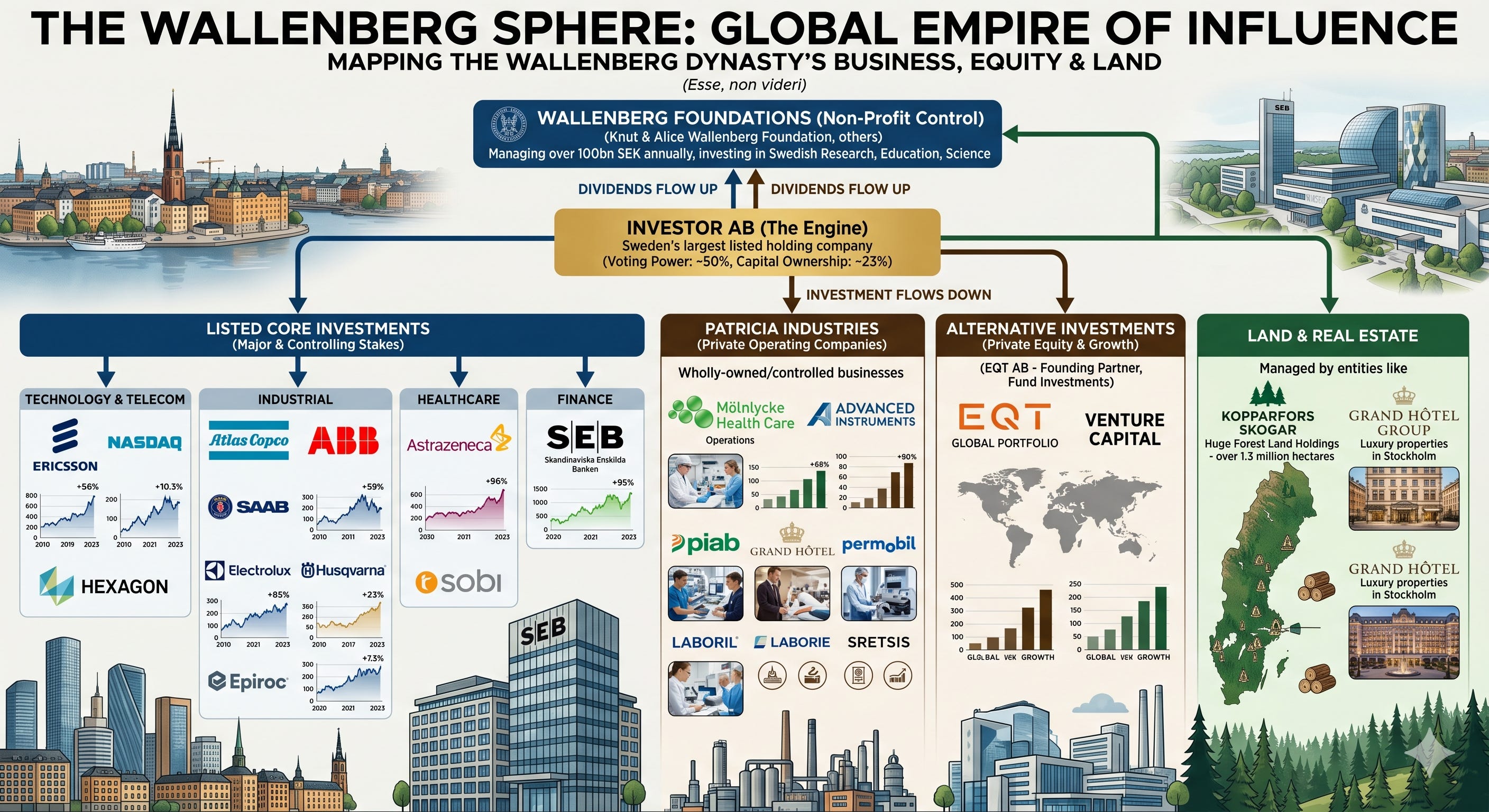
The Wallenberg Family: The Bofors deal was facilitated through Skandinaviska Enskilda Banken (SEB), part of the Wallenberg empire, highlighting the deep integration between Sweden’s private banking families and its defense exports.
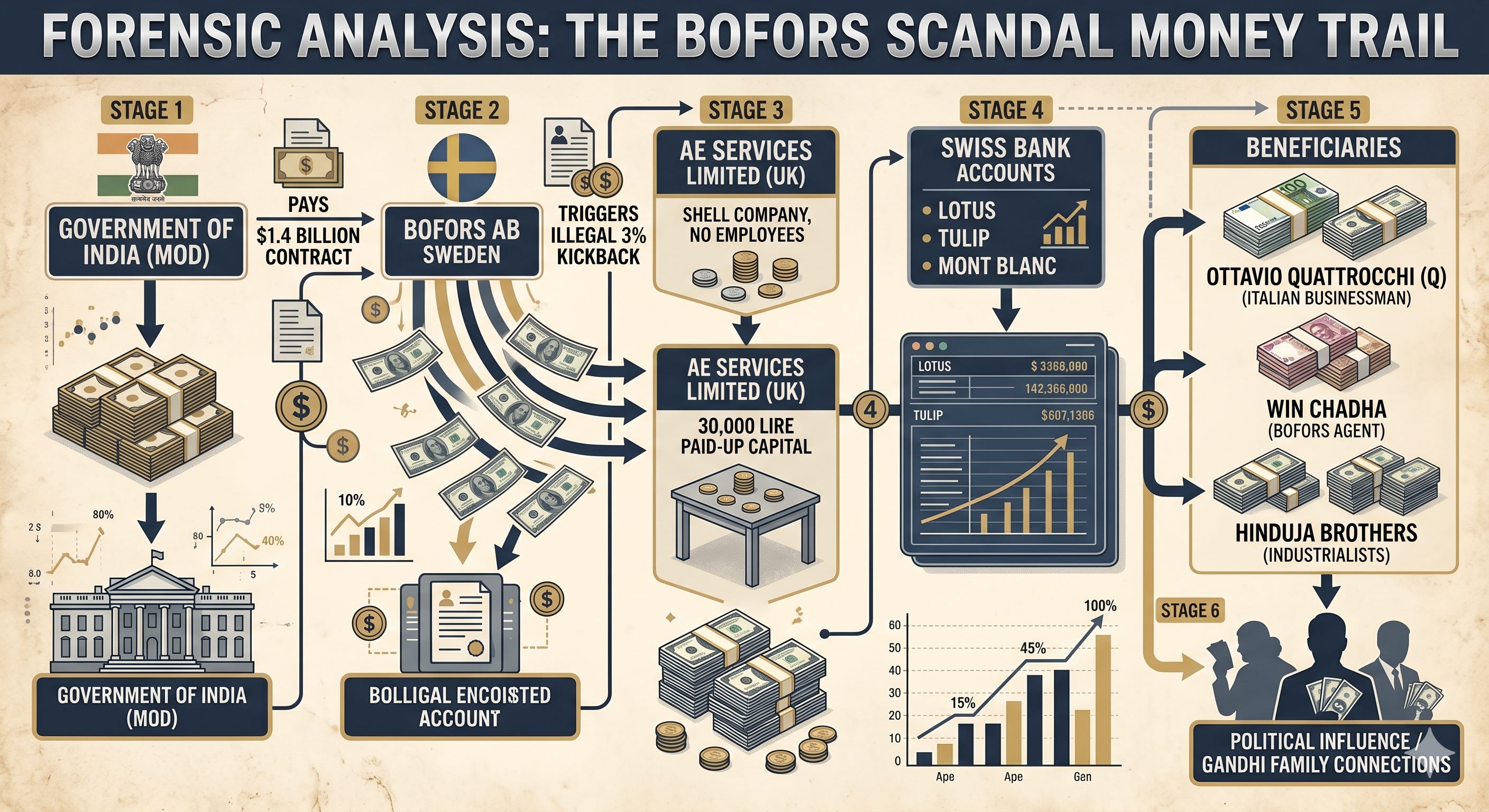
While the Bofors scandal is the most famous intersection, the Wallenbergs—often called the “Rockefellers of Sweden”—had significant, albeit quieter, ties to India throughout Indira’s tenure.
The Industrial Gateway (1960s – 1980s)
The Wallenberg family’s influence was exerted primarily through their massive industrial holdings. By the 1970s, the family controlled roughly 40% of Sweden’s industrial workforce.
Ericsson and ABB: Under Indira’s push for infrastructure and “Self-Reliance” (Atmanirbhar), Wallenberg-controlled entities like
Ericsson and ASEA (which later merged into ABB) were already established in the Indian market, providing the technical architecture for India’s burgeoning telecommunications and power grids.
Atlas Copco: This is a key Wallenberg firm that has operated in India since 1960. During the Indira years, Atlas Copco India was a major supplier of mining and construction equipment, directly supporting the state-led industrialization projects of her five-year plans.
Banking and Finance (SEB)
The family’s flagship bank, Skandinaviska Enskilda Banken (SEB), served as the financial engine for these deals.
Financing State Projects: SEB facilitated the export credits and financial guarantees necessary for the Indian government to purchase heavy Swedish machinery.
The Transition Point: While the “Bofors” deal (which SEB financed) is often associated with Rajiv Gandhi, the negotiations and the strengthening of the Sweden-India industrial pipeline were solidified during Indira’s final term (1980–1984).
The Substation Subversion: ASEA, ABB, and the Wiring of the Indian Grid
While the early 1980s saw the international community grappling with fragmented security apparatuses, India was facing an entirely different, internal fragmentation: its electric grid. At the dawn of the decade, a unified Indian national grid did not exist. Instead, the country’s electrical architecture was partitioned into five entirely autonomous regional grids. Because these provincial networks operated on asymmetrical frequencies and unstable phase alignments, they could not be directly interconnected via traditional Alternating Current (AC) transmission lines. If one region suffered a catastrophic power deficit while a neighboring territory held a massive surplus, the existing infrastructure lacked the technical capacity to transfer bulk electricity without triggering a total cascading collapse of both systems.
To resolve this industrial bottleneck, India’s National Thermal Power Corporation (NTPC) turned to the Swedish industrial jewel of the Wallenberg empire: ASEA (Allmänna Svenska Elektriska Aktiebolaget). Under the guidance of Wallenberg-backed engineers, ASEA had spent decades pioneering High-Voltage Direct Current (HVDC) Technology—a radical methodology that bypassed the synchronization limits of standard AC grids by converting bulk electricity into direct current for isolated transmission.
In the mid-1980s, this culminated in a historic engineering contract: the construction of India’s first-ever Vindhyachal Back-to-Back (BTB) HVDC Station in Madhya Pradesh. Designed as a massive, 500 MW electronic converter box, the station allowed the unsynchronized AC electricity of the Western regional grid to be stepping-stone converted to DC, and then seamlessly reinjected as synchronized AC power matching the exact frequency of the Northern grid. For the first time in Indian history, bidirectional bulk power could flow between regions, establishing the structural proof-of-concept that would eventually underpin the nation’s entire modern grid stability.
Right in the middle of executing these foundational infrastructure overhauls, the corporate architecture behind the technology underwent its own tectonic shift. In 1988, ASEA completed a historic global merger with Switzerland’s Brown Boveri to form ABB (Asea Brown Boveri). On the subcontinent, this consolidation triggered an immediate restructuring of local corporate assets. The newly formed multinational merged the Swedish operations with Hindustan Brown Boveri, a legacy domestic manufacturing presence that had been fabricating transformers and switchgears in India since 1949.
This corporate evolution effectively granted the newly christened ABB India an absolute, end-to-end monopoly over the high-voltage transmission corridors required for India’s accelerating liberalization push. The 1980s did not merely see the modernization of India’s power grid; it saw the vital infrastructure of a rising global power become deeply tethered to the consolidated financial and engineering web of a transnational corporate hegemony.
The Transnational “Back-Channel” Paradigm: Hammer and the Gandhis
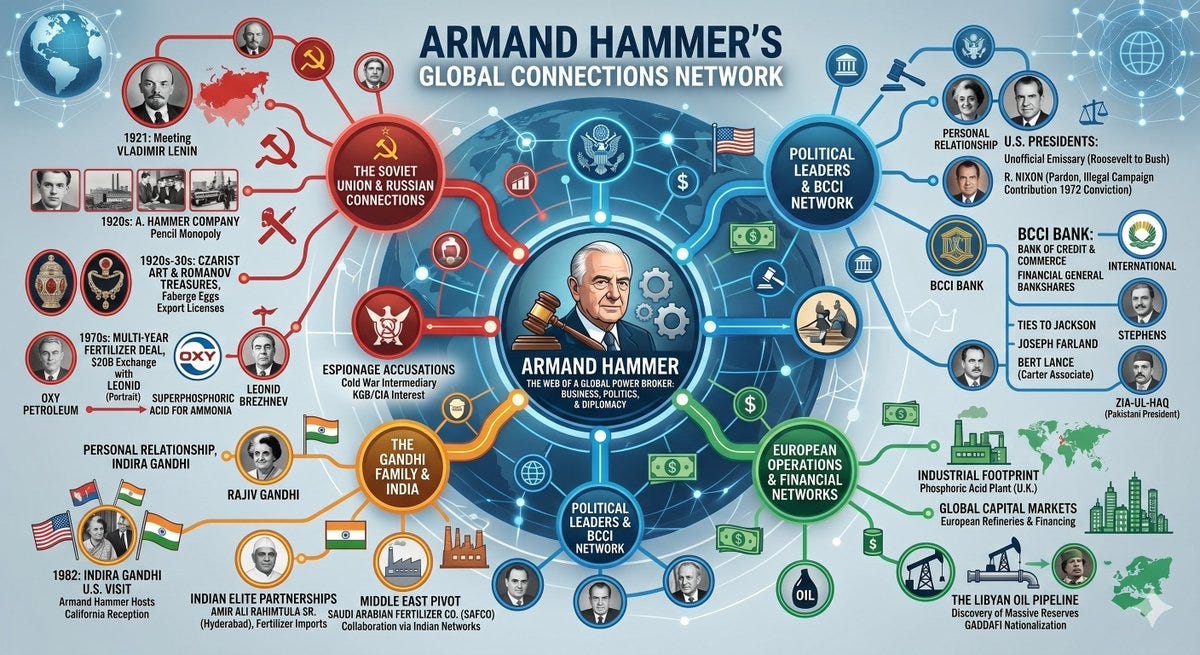
Armand Hammer’s primary asset was not merely Occidental Petroleum’s capital, but his unique status as a trusted, extra-diplomatic conduit to the Kremlin, established during his personal interactions with Vladimir Lenin in the 1920s.
The Shared Soviet Orbit: Throughout the Cold War, the Gandhi family (under both Indira and Rajiv Gandhi) maintained a deep strategic, military, and economic alignment with the Soviet Union to counterbalance US-Pakistan ties, while remaining the nominal leaders of the Non-Aligned Movement (NAM).
The Structural Inference: Hammer and the Gandhi administrations occupied identical geopolitical terrain. Both were vital Western-facing interlocutors for a highly insular Soviet leadership. Hammer leveraged his Soviet relationship to secure global commodity monopolies (such as Siberian fertilizer counter-trade deals), while the Gandhi administration used its Moscow pipeline to secure advanced conventional weaponry and industrial state assets. They represented the two different faces—one corporate, one state—of Western engagement with the Soviet bloc.
Pre-1984 Ties to Indira Gandhi
During Indira’s final term (1980–1984), the relationship shifted from simple trade to deep technological “entanglement”:
Conclusion: The Architecture of the Interregnum
To review the tumultuous landscape of the 1980–1986 window is to realize that we are not analyzing a series of isolated political crises, but rather the messy, birth pangs of our modern transnational reality. For decades, conventional history has compartmentalized these threads—treating the Bofors scandal as a localized Indian political dispute , the Air India bombing as a tragic footnote of Canadian judicial rigidities , and the unification of the Indian power grid as a routine triumph of industrial engineering.
When mapped together, however, the boundaries of these parallel histories dissolve. The 1980s functioned as a highly volatile, anomalous interregnum where the old guardrails of post-colonial statecraft and sovereign idealism were permanently dismantled. It was an era where the elite, cosmopolitan diplomacy of the mid-century—personified by the paternalistic alliance between the Gandhis and the Tatas—was swiftly eclipsed by a hyper-financialized, boundary-less network of global dealmakers, shell companies, and transnational holding groups. From the smoke-filled bazaar origins of the Hinduja empire to the quiet, multi-billion-dollar corporate boardrooms of the Wallenberg sphere, capital became entirely detached from national allegiance.